
- Home
-
Point of Interest
MunicipalityCategory
 La Palma
La isla Bonita - Contact
- La Palma Blog

Home
>
Point of Interest
>
La Palma
>
El Paso
>
Volcan de Tajogaite
View points - Hiking
Volcan de Tajogaite - Unique volcanic landscape and the most recent geological history of La Palma
El Paso, La Palma
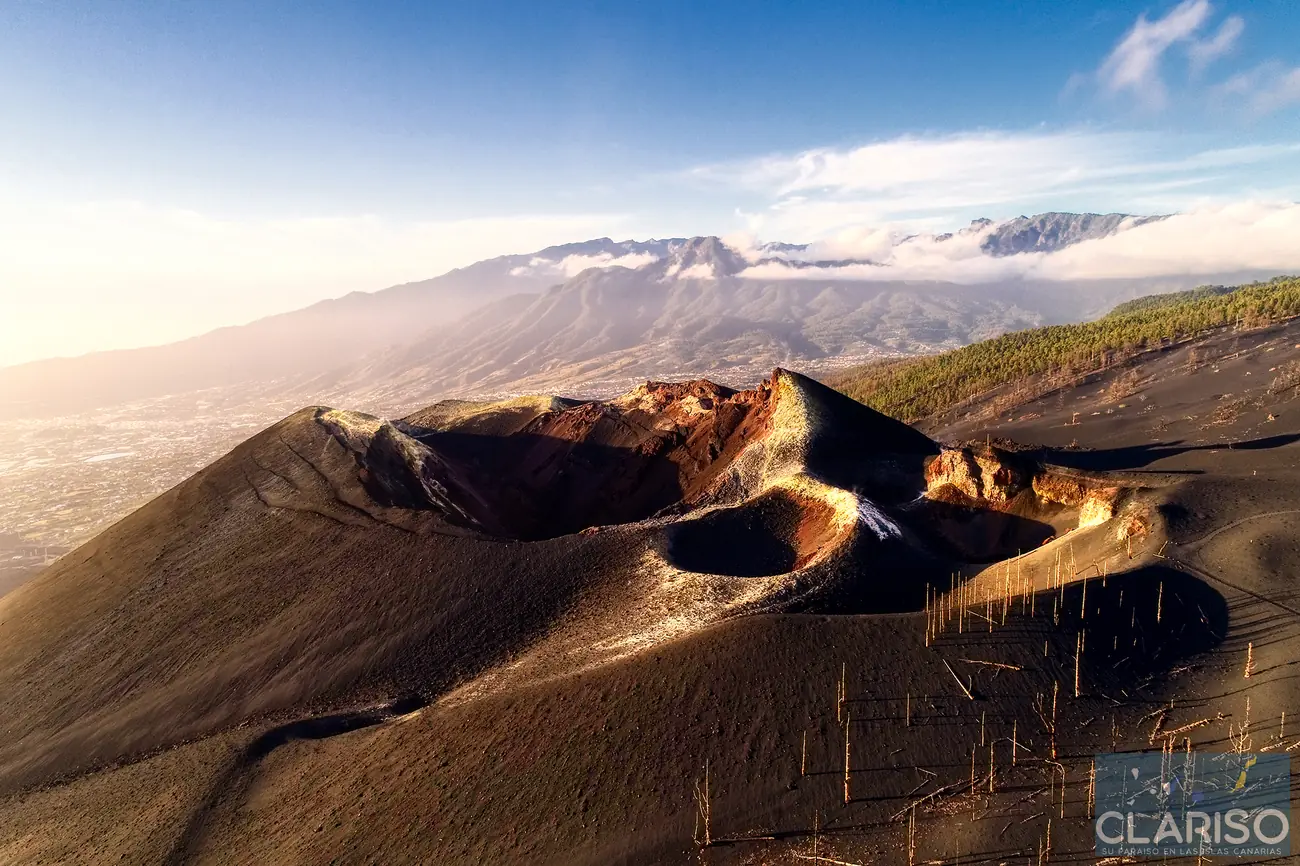
Volcán de Tajogaite – the youngest volcano in Spain on La Palma
Are you planning your holiday on La Palma and want to discover a place that reflects the island’s most recent history like no other? Then the Volcán de Tajogaite is one of the most impressive destinations on the island. This new volcano was formed during the 2021 eruption and has permanently reshaped the western landscape of La Palma. Today, Tajogaite is a place where nature, geology and history come together in a unique way.
Location and access: The Volcán de Tajogaite is located on the western slope of the Cumbre Vieja volcanic ridge in the municipality of El Paso, in the area of Cabeza de Vaca / Montaña Rajada. This region is one of the most volcanically active areas in the Canary Islands. The volcano can be seen from various points on the west side of the island, especially from Tajuya, the coastline or higher areas of the Cumbre Vieja.
Name origin: The name “Tajogaite” comes from the language of the Benahoarites, the indigenous people of La Palma, and roughly means “split mountain”. It perfectly describes the formation of the volcano along an eruptive fissure and was historically linked to this area before the eruption.
Structure of the volcano: Tajogaite is a strombolian volcano with a fissure eruption, characterized by lava fountains, ash emissions and gas release. The newly formed cone reaches about 1,120 to 1,122 meters above sea level, with a main cone around 200 meters high. Around six craters formed along the fissure in a visible alignment.
The 2021 eruption: Around 25,000 small earthquakes were recorded before the eruption. On September 19, 2021, at around 15:13, the eruption began in Cabeza de Vaca. Over the following weeks, phases of lava flow alternated with explosive ash emissions. The cone constantly changed with new vents and partial collapses. The eruption ended on December 13, 2021 after 85 days and 8 hours, making it the longest recorded eruption on La Palma. The official end was declared on December 25.
Impact on the island: More than 200 million cubic meters of lava covered over 1,200 hectares. The most affected areas were El Paso, Los Llanos de Aridane and Tazacorte. Around 2,700 to 3,000 buildings were destroyed and about 73.8 km of roads were buried. The lava reached the ocean and formed new lava deltas, reshaping the coastline.
Current volcanic landscape: The area shows a striking contrast between black lava, green banana plantations and the deep blue Atlantic. The lava flows are still clearly visible from the volcano down to the coast.
Between destruction and renewal: The volcano symbolizes both destruction and renewal. Entire areas such as Todoque disappeared, while nature slowly begins to recover.
Significance: Tajogaite is the youngest volcano in Spain and an important site for geological research and geotourism.
Best views of the Tajogaite volcano
The easiest and at the same time most impressive views of the Volcán de Tajogaite on La Palma can be found in El Paso, more precisely in the area of Tajuya. Right by the church, which became one of the most well-known viewing points on the island during the volcanic eruption in 2021, you get a clear and impressive view of the volcano and the surrounding lava fields. This spot is located directly by the road and is easily accessible – perfect for a first impression of the new landscape.
An even more intense experience of the Tajogaite can be found along the old road between El Paso and Las Manchas. Here you are much closer to the volcanic area and can truly appreciate the scale of the lava fields as well as the structure of the volcanic cone. In this area you will also find the holiday homes of the complex
Villa Cerca Verde, offering a direct connection to the island’s most recent history and serving as an ideal base for exploring the surroundings.
Especially in the evening hours, an extraordinary play of colors emerges: black lava, green vegetation and the Atlantic Ocean in the background create one of the most impressive views on La Palma. Here, the Tajogaite is not only a natural phenomenon, but a living part of the landscape that continues to evolve.
Conclusion: The Volcán de Tajogaite is one of the most significant places on La Palma, showcasing the power of nature and the island’s transformation.
Link to Google Maps
Further destinations in La Palma
More ideas for your holiday in La Palma


Holiday Homes & Accommodation near Volcan de Tajogaite – Stay on La Palma
Selected holiday homes nearby – perfect for short distances, nature experiences and relaxing holidays on La Palma.


