
- Home
-
Point of Interest
MunicipalityCategory
 La Palma
La isla Bonita - Contact
- La Palma Blog

Home
>
La Palma Blog
>
Blog Details
>
Storm “Therese” on La Palma – update 21.03.2026: current situation, flights & forecast
Storm “Therese” on La Palma – update 21.03.2026: current situation, flights & forecast
Storm “Therese” is currently causing exceptional weather conditions on La Palma, with heavy rain, strong winds and major disruptions to air traffic. In this update, you will find everything you need to know about the current situation, its impact on the island and what to expect in the coming days.

Storm “Therese” Update on La Palma – current situation, flight disruption & forecast (March 2026)
La Palma remains under the influence of the powerful storm system “Therese”, which has been affecting the Canary Islands since March 18, 2026. This update builds on our initial report and shows the latest developments. You can find the original article here: Storm on La Palma – initial situation overview .
At the start of spring, the island is currently showing an unusually rough side: heavy rain, strong winds, snow in the mountains and major disruptions to air traffic have been dominating the situation for several days.
For guests currently on the island as well as travelers planning to arrive, it is especially important to closely follow developments and remain flexible.

Current weather situation on La Palma
Since mid-week, La Palma has been under the influence of a strong Atlantic low-pressure system. What initially began with scattered showers quickly developed into a widespread heavy rainfall event affecting large parts of the island.
Particularly in higher elevations, exceptionally high rainfall amounts have been recorded. Within a short time, more than 50 mm of rain fell, and in some periods even significantly more. Overall, some areas recorded over 100 liters per square meter within just 12 hours.
Currently on-site in Arecida (Tijarafe), around 141 liters of rain have been recorded in recent days: 37 l (Wednesday), 39 l (Thursday), 47 l (Friday) and 18 l today.
This brings the total rainfall for 2026 to approximately 282 liters. The soil is heavily saturated, meaning additional rainfall has immediate effects on roads, barrancos and infrastructure.
At the same time, strong southwest winds with gusts of over 100 km/h are creating difficult conditions. In higher elevations around the Roque de los Muchachos, snowfall has also been observed – an unusual sight at the beginning of spring.
You can find official warnings and updates here: AEMET weather warnings for La Palma .
Particularly in higher elevations, exceptionally high rainfall amounts have been recorded. Within a short time, more than 50 mm of rain fell, and in some periods even significantly more. Overall, some areas recorded over 100 liters per square meter within just 12 hours.
Currently on-site in Arecida (Tijarafe), around 141 liters of rain have been recorded in recent days: 37 l (Wednesday), 39 l (Thursday), 47 l (Friday) and 18 l today.
This brings the total rainfall for 2026 to approximately 282 liters. The soil is heavily saturated, meaning additional rainfall has immediate effects on roads, barrancos and infrastructure.
At the same time, strong southwest winds with gusts of over 100 km/h are creating difficult conditions. In higher elevations around the Roque de los Muchachos, snowfall has also been observed – an unusual sight at the beginning of spring.
You can find official warnings and updates here: AEMET weather warnings for La Palma .
Impact on the island & infrastructure
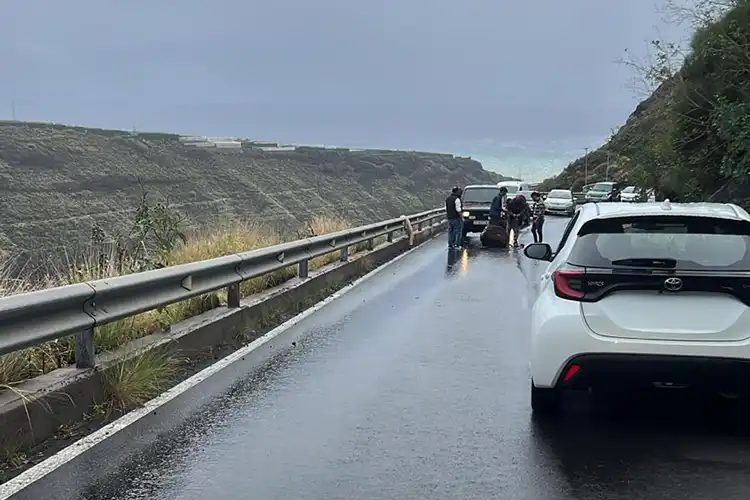
The combination of heavy rain and strong winds is having noticeable effects across the island. Road closures have occurred in higher areas, particularly around the Roque de los Muchachos. Major routes such as the LP-3 and LP-210 are partially restricted or under observation.
Hiking trails and natural areas have also been closed. The risk of rockfalls and landslides is currently elevated due to saturated ground conditions.
The situation in the barrancos is especially critical. They are currently carrying significantly more water than usual and can change rapidly. In some cases, debris is transported all the way to coastal areas.
Hiking trails and natural areas have also been closed. The risk of rockfalls and landslides is currently elevated due to saturated ground conditions.
The situation in the barrancos is especially critical. They are currently carrying significantly more water than usual and can change rapidly. In some cases, debris is transported all the way to coastal areas.
Visible impact on coast & roads
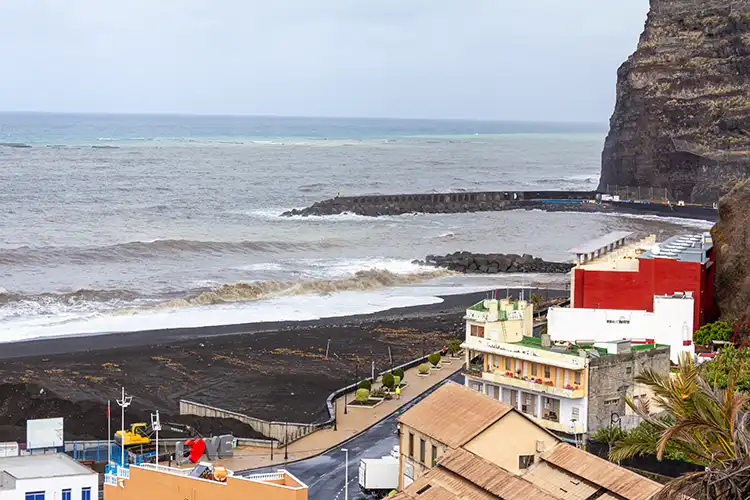
Even beyond air traffic, the effects of the storm are clearly visible. Along the coast, strong wave activity is causing rough seas and washed-up debris.
At the same time, overflowing drainage systems and water on roads are being observed in some areas. Combined with strong winds and reduced visibility, this creates challenging driving conditions.
At the same time, overflowing drainage systems and water on roads are being observed in some areas. Combined with strong winds and reduced visibility, this creates challenging driving conditions.
Flight traffic & arrivals – current situation
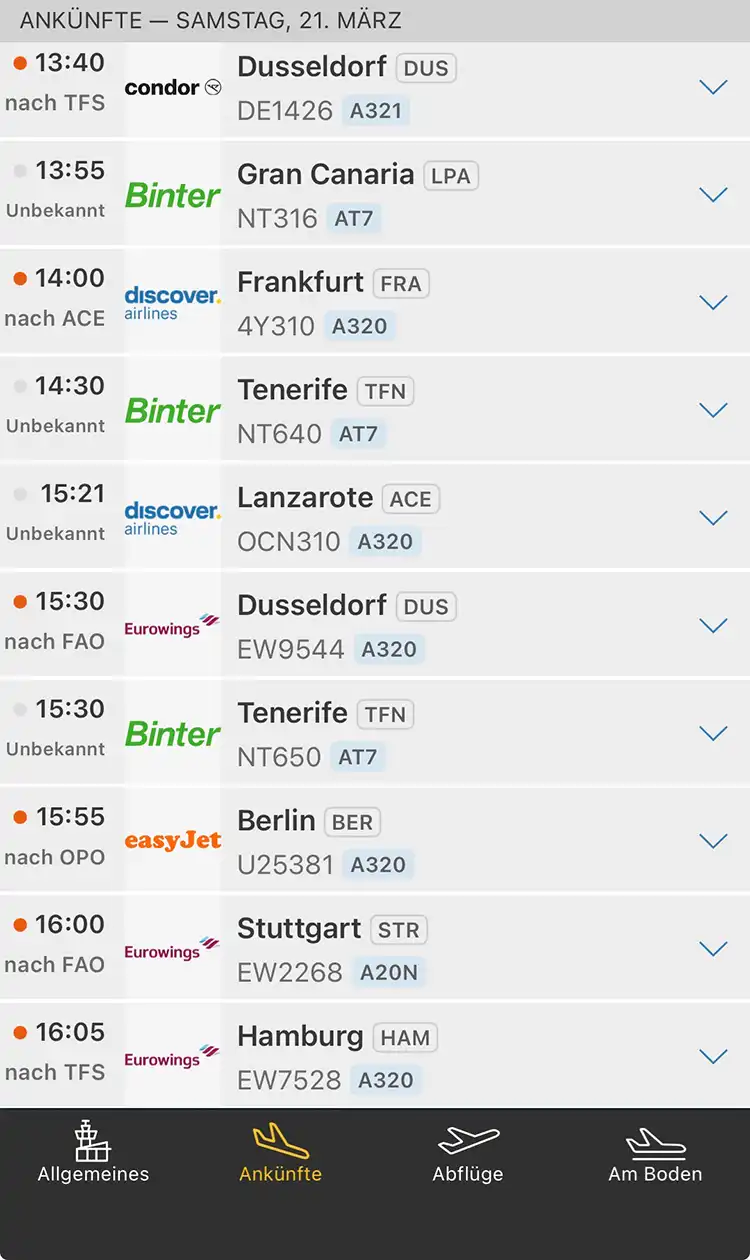
The most noticeable impact is currently seen in air traffic. Since March 18, international flights have already been diverted. Aircraft from Zurich, Madrid and Frankfurt were unable to land on La Palma and were redirected to other islands such as Tenerife or Gran Canaria.
In the following days, the situation remained tense. Some flights could be operated, while others – especially inter-island connections – continued to face problems.
A particularly unusual case occurred with a flight from Berlin: the aircraft landed on La Palma, took off again, and after holding for a prolonged period had to return once more to the island. For many passengers, this meant an additional unplanned night.
On March 21, 2026, the situation escalated further: there is currently almost a complete standstill in air traffic. So far, no inter-island flights have been able to operate. International flights are also heavily affected – being diverted, canceled or not even departing.
Diversion destinations include Tenerife South, Gran Canaria, Fuerteventura and even Faro. Some flights – such as those from Basel – were completely canceled.
Rescue flights for stranded passengers were also unable to reach the island and had to turn back. This means many travelers are currently forced to stay longer on La Palma or other islands than originally planned.
In the following days, the situation remained tense. Some flights could be operated, while others – especially inter-island connections – continued to face problems.
A particularly unusual case occurred with a flight from Berlin: the aircraft landed on La Palma, took off again, and after holding for a prolonged period had to return once more to the island. For many passengers, this meant an additional unplanned night.
On March 21, 2026, the situation escalated further: there is currently almost a complete standstill in air traffic. So far, no inter-island flights have been able to operate. International flights are also heavily affected – being diverted, canceled or not even departing.
Diversion destinations include Tenerife South, Gran Canaria, Fuerteventura and even Faro. Some flights – such as those from Basel – were completely canceled.
Rescue flights for stranded passengers were also unable to reach the island and had to turn back. This means many travelers are currently forced to stay longer on La Palma or other islands than originally planned.
Ferries as an alternative
In addition to air traffic, ferry connections are also affected. Routes have been reduced or combined. Nevertheless, ferries currently remain one of the more stable alternatives, especially via Tenerife.
Even though strong winds and higher waves create challenging conditions, ferries continue to operate. This makes them an important option to reach La Palma, especially for travelers stranded in Tenerife due to flight cancellations.
You can find detailed information about ferry travel here: Travel to La Palma by ferry – a comfortable and reliable alternative via Tenerife .
Even though strong winds and higher waves create challenging conditions, ferries continue to operate. This makes them an important option to reach La Palma, especially for travelers stranded in Tenerife due to flight cancellations.
You can find detailed information about ferry travel here: Travel to La Palma by ferry – a comfortable and reliable alternative via Tenerife .
Live insight: Webcam from Tijarafe
You can get a direct impression of the current situation via our
live webcam on La Palma (Tijarafe)
.
It shows real-time weather conditions, visibility and cloud development on the west coast.
It shows real-time weather conditions, visibility and cloud development on the west coast.
Forecast – what’s next?
According to current forecasts, the weather situation will remain unstable in the short term. Even if there are temporary calmer periods, rain and wind are still expected.
A gradual improvement is expected from Tuesday onwards. From Wednesday, conditions are forecast to stabilize significantly.
As with all storm situations, forecasts can change at short notice.
A gradual improvement is expected from Tuesday onwards. From Wednesday, conditions are forecast to stabilize significantly.
As with all storm situations, forecasts can change at short notice.
Important advice for travelers
– Avoid unnecessary travel
– Do not go hiking, especially in barrancos
– Avoid coastal areas during heavy swell
– Check your flight status regularly
– Plan with flexibility
– Do not go hiking, especially in barrancos
– Avoid coastal areas during heavy swell
– Check your flight status regularly
– Plan with flexibility

“
The current weather situation on La Palma is exceptional –
but experience shows that once the wind drops,
air traffic often normalizes faster than expected.
”
Share


