
- Home
-
Point of Interest
MunicipalityCategory
 La Palma
La isla Bonita - Contact
- La Palma Blog

Home
>
La Palma Blog
>
Blog Details
>
Los Indianos on La Palma – history, schedule and carnival highlights 2026
Los Indianos on La Palma – history, schedule and carnival highlights 2026
Once a year, La Palma transforms into a white cloud of baby powder, music and exuberant joy. Los Indianos is the island’s most famous carnival day, a traditional celebration with historical roots, established rituals and a truly unique atmosphere. This article explains the history of Los Indianos, the typical daily schedule, the role of La Negra Tomasa and the most important carnival events across the island in February 2026.

Los Indianos on La Palma – white powder, rich history and a state of exception
Once a year, the otherwise quiet island of La Palma turns into a single white cloud:
Los Indianos is not only the island’s most famous carnival day, but also one of the
most extraordinary festivals in the Canary Islands. Between baby powder, Cuban music
and an exuberant atmosphere, there is far more history behind the celebration than one
might initially expect.
Origins and history of Los Indianos
The term “Indianos” originally referred to Palmeros who emigrated to Cuba and other
parts of Latin America during the 19th and early 20th centuries.
Many of them later returned to the island, some having accumulated considerable wealth.
Dressed in white, carrying suitcases, cigars and displaying exaggerated luxury,
they showcased their newly acquired social status.
Los Indianos is a satirical homage to these returnees. The festival playfully caricatures wealth, exoticism and social differences, always with a wink of irony. The white clothing symbolises elegance and distance, but this symbolism is humorously broken with the very first throw of powder.
Los Indianos is a satirical homage to these returnees. The festival playfully caricatures wealth, exoticism and social differences, always with a wink of irony. The white clothing symbolises elegance and distance, but this symbolism is humorously broken with the very first throw of powder.
When and where does Los Indianos take place?
Los Indianos is celebrated every year on Carnival Monday and takes place mainly
in Santa Cruz de La Palma. From the morning onwards, the capital begins to fill up,
reaching its peak in the early afternoon.
Especially around the harbour, the Avenida Marítima and the narrow streets of the old town, there is no escape: music, dancing, large crowds and fine white powder everywhere.
Especially around the harbour, the Avenida Marítima and the narrow streets of the old town, there is no escape: music, dancing, large crowds and fine white powder everywhere.
La Negra Tomasa – the iconic highlight of Los Indianos
One of the most special highlights of Los Indianos is the figure of La Negra Tomasa,
a fixed and emotionally charged moment of the festival that attracts thousands of people every year.
La Negra Tomasa was created in 1992 by Víctor Lorenzo Díaz Molina, known as Sosó, and has since become the iconic character of Día de Los Indianos on La Palma. Contrary to what some might expect, it is not a musical tradition, but a living character full of humour, charm and carnival exaggeration.
Every year, Sosó is carefully made up and costumed early in the morning, before being welcomed at the harbour of Santa Cruz de La Palma in colourful, eye-catching dresses. From there, La Negra Tomasa dances through the streets towards the Plaza de España, which on this day is symbolically renamed “Plaza de La Habana”. For many, her arrival marks the official beginning of the carnival state of exception.
La Negra Tomasa was created in 1992 by Víctor Lorenzo Díaz Molina, known as Sosó, and has since become the iconic character of Día de Los Indianos on La Palma. Contrary to what some might expect, it is not a musical tradition, but a living character full of humour, charm and carnival exaggeration.
Every year, Sosó is carefully made up and costumed early in the morning, before being welcomed at the harbour of Santa Cruz de La Palma in colourful, eye-catching dresses. From there, La Negra Tomasa dances through the streets towards the Plaza de España, which on this day is symbolically renamed “Plaza de La Habana”. For many, her arrival marks the official beginning of the carnival state of exception.
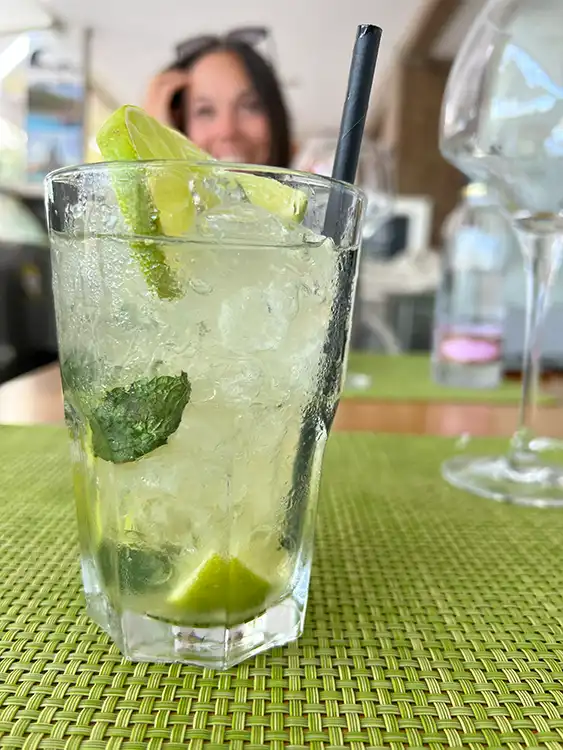
Mojitos, rum and everyday preparations
Los Indianos does not begin only on Carnival Monday.
Several days beforehand, everyday life on La Palma already adapts to the celebration.
In supermarkets, special carnival sets appear:
rum, cola, tonic or Schweppes, often packaged together
and perfect for spontaneous celebrations.
Typical items in the days leading up to Los Indianos include:
Typical items in the days leading up to Los Indianos include:
- Baby powder in large containers
- White hats, sometimes with Havana Club logos
- Accessories such as suspenders, fans or sunglasses
The typical course of the day
Carnival day begins early in the morning in Santa Cruz de La Palma.
From the first hours of the day, the streets fill with people dressed in white,
while visitors and locals gather around the harbour.
The official start traditionally takes place with the arrival of the “Indianos” at the harbour,
symbolically recalling the return of emigrants from Cuba.
A central moment of the day is the appearance of La Negra Tomasa. After arriving at the harbour, she dances through the streets of the capital towards the Plaza de España, which on this day is symbolically renamed “Plaza de La Habana”. Accompanied by music, applause and an ever-growing crowd, this procession marks for many the true beginning of the carnival atmosphere.
From there, the festivities spread throughout the entire city centre. Along the Avenida Marítima, in the streets of the old town and on the main squares, Caribbean rhythms, brass bands, spontaneous dance groups and live music dominate the scene. Many bars open already in the morning, contributing to a lively atmosphere throughout the day.
As the afternoon progresses, the celebration reaches its peak. The use of baby powder increases noticeably, visibility is sometimes reduced, and faces, clothing and streets turn completely white. Despite the large crowds, the atmosphere generally remains peaceful, joyful and communal.
Towards the evening, the crowds gradually begin to disperse. Some visitors leave the city centre, while others move on to bars, squares or private gatherings. Well into the late evening hours, music, conversations and a relaxed atmosphere continue to shape the city.
A central moment of the day is the appearance of La Negra Tomasa. After arriving at the harbour, she dances through the streets of the capital towards the Plaza de España, which on this day is symbolically renamed “Plaza de La Habana”. Accompanied by music, applause and an ever-growing crowd, this procession marks for many the true beginning of the carnival atmosphere.
From there, the festivities spread throughout the entire city centre. Along the Avenida Marítima, in the streets of the old town and on the main squares, Caribbean rhythms, brass bands, spontaneous dance groups and live music dominate the scene. Many bars open already in the morning, contributing to a lively atmosphere throughout the day.
As the afternoon progresses, the celebration reaches its peak. The use of baby powder increases noticeably, visibility is sometimes reduced, and faces, clothing and streets turn completely white. Despite the large crowds, the atmosphere generally remains peaceful, joyful and communal.
Towards the evening, the crowds gradually begin to disperse. Some visitors leave the city centre, while others move on to bars, squares or private gatherings. Well into the late evening hours, music, conversations and a relaxed atmosphere continue to shape the city.
Los Indianos is not only Santa Cruz
Although Santa Cruz de La Palma is the main centre of Los Indianos,
carnival is celebrated across the entire island of La Palma.
Each municipality sets its own focus and traditions,
spread throughout the whole month of February.
Carnival is therefore not a single event, but an island-wide celebration with regional character.
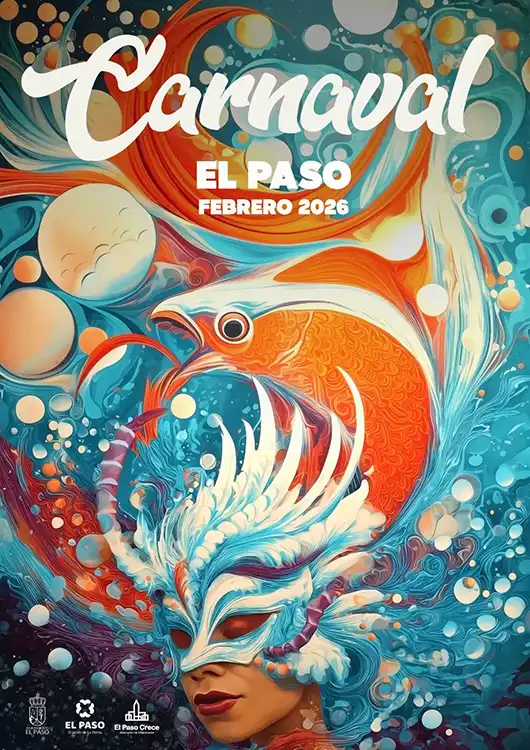
Carnival of El Paso – Fiesta de la Peluca
7 February 2026
El Paso
El Paso is known for its colourful Fiesta de la Peluca.
Wigs are an essential part of the outfit, creating a cheerful and playful atmosphere.
The celebration includes music, parades and numerous activities.
Programme start: from Friday, 6 February 2026 (children’s events, workshops and street parades).
Official information and programme details: Fiesta de la Peluca – El Paso
Programme start: from Friday, 6 February 2026 (children’s events, workshops and street parades).
Official information and programme details: Fiesta de la Peluca – El Paso
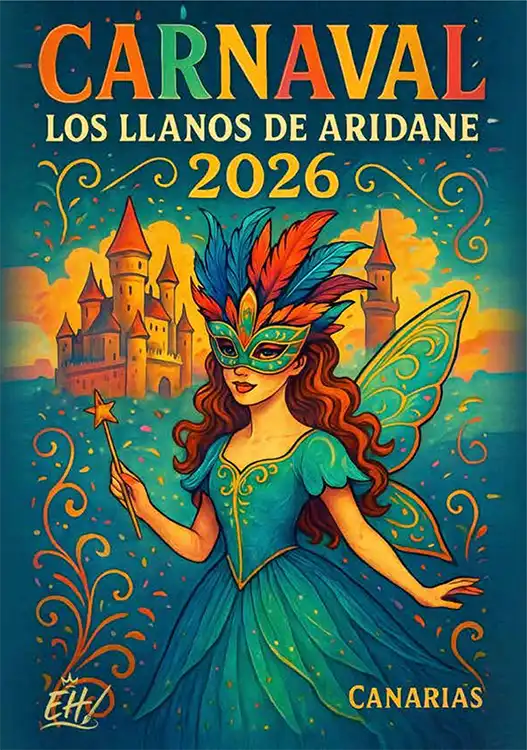
Carnival of Los Llanos de Aridane – Gran Polvacera
14 February 2026
Los Llanos de Aridane
The Gran Polvacera is the city’s famous baby powder battle
and one of the largest street parties in the west of the island.
The programme is complemented by the Gran Coso, gala events
and the traditional Entierro de la Sardina as part of the official carnival programme.
Wearing old clothes is advisable – you will almost certainly end up completely white.
Full official carnival programme: Carnival Programme Los Llanos de Aridane 2026 (PDF)
Wearing old clothes is advisable – you will almost certainly end up completely white.
Full official carnival programme: Carnival Programme Los Llanos de Aridane 2026 (PDF)
Los Indianos – Santa Cruz de La Palma
16 February 2026
Santa Cruz de La Palma
The island’s most famous carnival day, featuring celebrations in white,
baby powder battles and a unique atmosphere in the capital.
Carnival period: 12–22 February 2026 (parades, concerts and further events).
Carnival period: 12–22 February 2026 (parades, concerts and further events).
Entierro de la Sardina – San Andrés y Sauces
28 February 2026
San Andrés y Sauces
A traditional and humorous closing event of the carnival in this municipality.
Wearing black is a deliberate part of the staging for many participants.
Typical clothing and important tips
The most important rule for Los Indianos is simple: everything in white.
White shirts, dresses, hats, suspenders, wigs or colonial-style accessories – anything is allowed as long as it stands out and fits the Caribbean flair.
Important tips for visitors:
White shirts, dresses, hats, suspenders, wigs or colonial-style accessories – anything is allowed as long as it stands out and fits the Caribbean flair.
Important tips for visitors:
- Only baby powder is used – no paint
- Avoid contact lenses, sensitive cameras and new shoes
- A scarf or face covering can be useful in dense powder clouds
- Showering after the event is essential – preferably more than once ?
Holiday homes on La Palma during Carnival
Anyone wishing to experience Carnival on La Palma, and Los Indianos in particular,
should plan their accommodation well in advance.
During the carnival period, holiday homes are in high demand,
both in Santa Cruz de La Palma and in the western parts of the island.
On Clariso you will find holiday homes, apartments and villas spread across La Palma in various regions and locations. This allows visitors to combine the lively carnival atmosphere with quiet retreats or nature-based accommodation.
View holiday homes on La Palma
On Clariso you will find holiday homes, apartments and villas spread across La Palma in various regions and locations. This allows visitors to combine the lively carnival atmosphere with quiet retreats or nature-based accommodation.
View holiday homes on La Palma

“
Los Indianos is history, satire and pure joie de vivre –
a carnival that should be experienced at least once on La Palma.
”
Source notice:
The event posters for the Carnival of Los Llanos de Aridane 2026 and the Fiesta de la Peluca (El Paso) are provided by the respective organizers and town halls.
The use is strictly for editorial and informational purposes. There is no commercial connection with the organizers.
The event posters for the Carnival of Los Llanos de Aridane 2026 and the Fiesta de la Peluca (El Paso) are provided by the respective organizers and town halls.
The use is strictly for editorial and informational purposes. There is no commercial connection with the organizers.
Share


